Complex procurement challenges often start before the final technical solution is known. In Big Science environments, organisations frequently need to develop highly specialised systems, infrastructure or technologies where requirements evolve, different approaches need to be explored, and cooperation with potential suppliers plays an important role.
The INPROCAP Webinar 9: Competitive Dialogue in Practice, held on 18 September 2026, explored how Competitive Dialogue can support organisations in addressing such challenges and how this approach can be applied in real procurement situations.
The webinar brought together procurement experts and Big Science representatives to share practical experience, real examples and guidance for organisations considering Competitive Dialogue as part of their procurement approach.



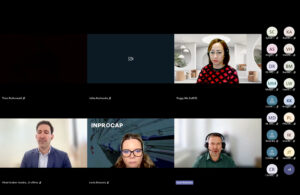
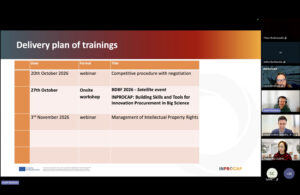

Understanding when Competitive Dialogue can help
The webinar started with an introduction to the purpose and role of Competitive Dialogue in innovation procurement.
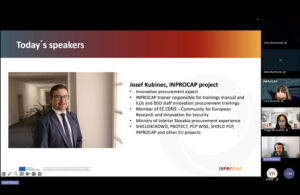
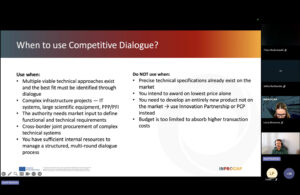
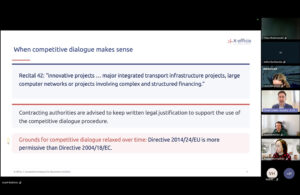
As explained by Jozef Kubinec, Innovation procurement expert and lawyer, Competitive Dialogue can be useful when the contracting authority understands the challenge it wants to solve, but cannot define the best solution in advance.
The approach can support situations where:
- existing solutions need significant adaptation,
- innovative approaches are required,
- technical specifications cannot yet be fully defined,
- the complexity of the project requires closer interaction with the market.
Rather than selecting from predefined solutions, Competitive Dialogue allows organisations to discuss possible approaches with selected suppliers and gradually refine the most suitable solution.
Learning from a real Big Science case
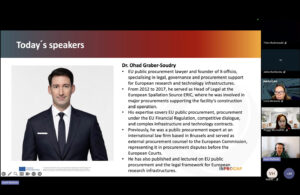
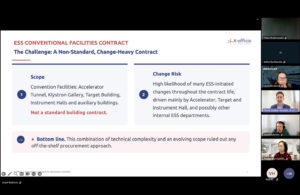
A key part of the webinar was the practical case study presented by Dr. Ohad Graber-Soudry from X-officio, who shared experience from the European Spallation Source (ESS) Conventional Facilities procurement.
The case demonstrated how Competitive Dialogue can provide flexibility when traditional procurement models cannot fully address the complexity of a project.
For ESS, the challenge involved large-scale infrastructure with a high level of uncertainty and expected changes during implementation. A standard fixed-price approach was not considered suitable, as it would not provide enough flexibility to manage evolving requirements.
Through Competitive Dialogue, ESS was able to work with potential contractors to explore solutions, discuss risks and develop a procurement approach better suited to the complexity of the project.
The case highlighted the importance of:
- preparing the dialogue process carefully,
- creating a transparent framework for discussions,
- balancing risks between the contracting authority and suppliers,
- using market knowledge to develop better solutions.
A new practical guide for Big Science organisations
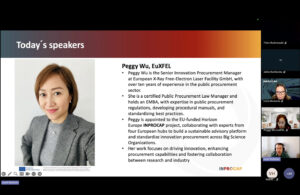
During the webinar, Peggy Wu from European XFEL introduced the new INPROCAP Competitive Dialogue Manual.
The manual was developed to support organisations that want to better understand and apply Competitive Dialogue in practice.
It provides guidance throughout the full procurement journey, from identifying the need and assessing innovation potential, through market engagement and procurement preparation, to evaluation, contract implementation and lessons learned.
The manual helps users to:
- understand the structure of the approach,
- clarify roles and responsibilities,
- identify important decision points,
- recognise common risks,
- access practical guidance and frequently asked questions.
Key lessons from the webinar
The discussions highlighted several important messages:
Competitive Dialogue starts with a challenge, not a predefined solution.
It is most valuable when organisations need to explore possible solutions together with the market.
Preparation is essential.
Clear objectives, defined roles and well-structured processes help make the dialogue effective.
Successful dialogue requires collaboration.
Procurement, legal and technical teams need to work closely together throughout the process.
Trust and transparency are fundamental.
Confidentiality and equal treatment ensure that all participants can contribute while maintaining a fair procedure.
Real-life experience matters.
Examples from Big Science organisations show how Competitive Dialogue can help address procurement challenges where standard approaches may not be sufficient.
Building Practical Knowledge on Innovation Procurement
Webinar 9 provided another practical perspective on innovation procurement, supporting Big Science Organisations, Industrial Liaison Officers, procurement professionals and companies in developing a better understanding of when and how to apply different procurement approaches.