Complex procurement does not always mean that the solution is unknown. Sometimes, the challenge is finding the best way to adapt, refine and deliver it. This is particularly relevant for Big Science Organisations, where specialised technical requirements, operational risks and innovative technologies often call for greater flexibility in procurement.

On 16 October 2026, the INPROCAP project hosted its 10th webinar, Competitive Procedure with Negotiation in Practice: From Requirements to the Right Solution, exploring how negotiations with suppliers can support better procurement outcomes while maintaining transparency and fair competition.
The session brought together three procurement experts – Jozef Kubinec (INPROCAP), Liisa Zander (European Spallation Source) and Jiří Šimon (Krajská zdravotní) – combining practical guidance with real-life procurement experience.
Understanding when negotiation adds value
The webinar opened with Jozef Kubinec, innovation procurement expert and lawyer, who introduced the Competitive Procedure with Negotiation (CPN) and its role in innovation procurement.
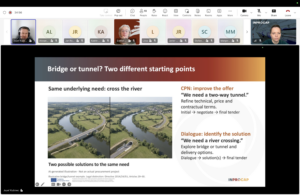
Unlike Competitive Dialogue, which helps buyers identify possible solutions when the best approach is still unclear, CPN is particularly useful when the requirements are sufficiently defined to invite initial tenders, but the proposed solutions need further refinement.
The procedure can help organisations address situations where:
- existing solutions require adaptation or integration,
- innovative design or technical development is needed,
- procurement involves significant complexity or risk,
- technical specifications cannot be precisely defined in advance.
Jozef also explained the main stages of the procedure, from selecting candidates and receiving initial tenders to negotiating improvements and evaluating final offers.
An important message was that negotiation is not simply a tool for reducing prices. Its value lies in improving the suitability, quality and feasibility of proposed solutions, while respecting the principles of equal treatment, confidentiality and transparency.
Applying negotiation in Big Science procurement
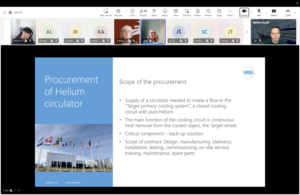
Bringing the perspective of a major European research infrastructure, Liisa Zander, Senior Procurement Officer at the European Spallation Source (ESS), contributed practical experience from managing complex, high-value procurement processes.
Her participation connected the procedural framework with the realities of purchasing specialised equipment and services in Big Science environments, where technical requirements, supplier capabilities and contractual arrangements must be carefully considered.
The ESS perspective provided an important link between procurement principles and their application in organisations working with highly specialised technologies and demanding operational requirements.
From procurement strategy to measurable results: Prague’s CameraCar case
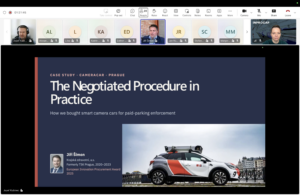
One of the webinar’s practical examples was presented by Jiří Šimon, Head of Public Procurement at Krajská zdravotní, who shared his experience from the Technical Road Administration of the City of Prague.
The case focused on the procurement of CameraCars – vehicles equipped with smart cameras used to monitor paid parking zones and collect data on road infrastructure.
Prague needed to replace an existing system that, despite functioning well, had limitations in vehicle positioning and created dependency on a single supplier.
Rather than prescribing a specific technology, the procurement team defined the outcomes it wanted to achieve: accurate parking monitoring, an adaptable solution, opportunities for additional applications and reduced supplier dependency.
The team selected the Competitive Procedure with Negotiation because it knew what it wanted to achieve, but not exactly how suppliers would deliver the solution.
Several elements contributed to the procurement’s success:
- Early market consultation helped identify available technologies and inform the requirements.
- Performance-based evaluation prioritised quality (60%), price (30%) and innovation (10%).
- Real-world testing allowed suppliers to demonstrate their solutions under actual traffic conditions.
- Accessible qualification requirements encouraged participation from SMEs and innovative companies.
- A flexible procurement strategy allowed the authority to negotiate if necessary, without making negotiation mandatory.
Interestingly, the contract was ultimately awarded without entering negotiations. Following testing and evaluation, the Czech technology company Iterait offered both the highest quality and the lowest price.
The results demonstrated the impact of this approach. Comparing October 2022 with October 2024, Prague achieved a 48% reduction in monthly costs, while the number of parking records increased by 61%. The cost per record decreased by 68%.
However, Jiří also shared an important lesson: even when negotiation is not necessary to select a supplier, it can provide valuable technical and operational insights. Looking back, he suggested that an additional negotiation round might have helped identify potential implementation challenges earlier.
Key lessons from the webinar
The presentations offered several important takeaways for procurement professionals and Big Science Organisations:
Start with clear objectives. Define what the procurement needs to achieve while leaving room for suppliers to propose suitable technical solutions.
Use negotiation where it adds value. The procedure should respond to genuine technical, commercial or operational needs, rather than simply seeking a lower price.
Engage with the market early. Preliminary consultations help buyers understand available technologies, anticipate risks and design realistic procurement requirements.
Evaluate performance, not just promises. Practical testing and measurable performance indicators can help ensure that proposed solutions deliver the expected results.
Combine flexibility with transparency. Clear minimum requirements, structured evaluation and equal treatment of suppliers are essential throughout the process.
Learn from implementation. Real procurement experiences demonstrate that successful outcomes depend not only on choosing the right procedure, but also on anticipating operational challenges and maintaining effective cooperation between procurement, technical and legal teams.
Strengthening innovation procurement in Big Science
Webinar 10 demonstrated how the Competitive Procedure with Negotiation can help organisations move from clearly identified requirements towards innovative, practical and effective solutions.
By combining a structured procurement framework with experiences from the European Spallation Source and Prague’s CameraCar project, the session offered valuable insights for Big Science Organisations, Industrial Liaison Officers, procurement professionals and suppliers.
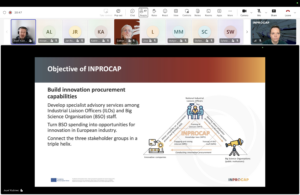
The webinar formed part of the INPROCAP Training Series, which aims to strengthen innovation procurement capabilities and support more effective connections between Big Science Organisations and European industry.